One system for the whole business. Ready for AI from day one.
We replace the handful of systems you run on with one bespoke system built around how you already work. One source of truth from enquiry to invoice.
You cannot point AI at five systems.
When the same job lives in a CRM, a scheduler, a spreadsheet and the accounts package, each copy slightly different, there is nothing coherent for automation to work on. The foundation has to come first.
What we build.
Bespoke software at a price that makes sense, built to replace the whole stack. One source of truth for the business, from enquiry to delivery.
CRM & enquiries
Every lead, customer and conversation in one place, with the history on the record, not in somebody's inbox.
Scheduling & job management
The day's work, who's doing it, where, and what it's worth, on one board the office and the crew both look at.
Property & portfolio management
Rent, arrears, lease expiry, compliance and the documents behind them. One screen for a commercial portfolio, not a filing cabinet.
Or whatever your business actually runs on.
We learn how you work, then build that.
- Auto-schedule the week and watch it balance itself
- Drag a visit to another crew or day
- Send the Ashdown House quote
- Switch to Crew and complete a job with no signal
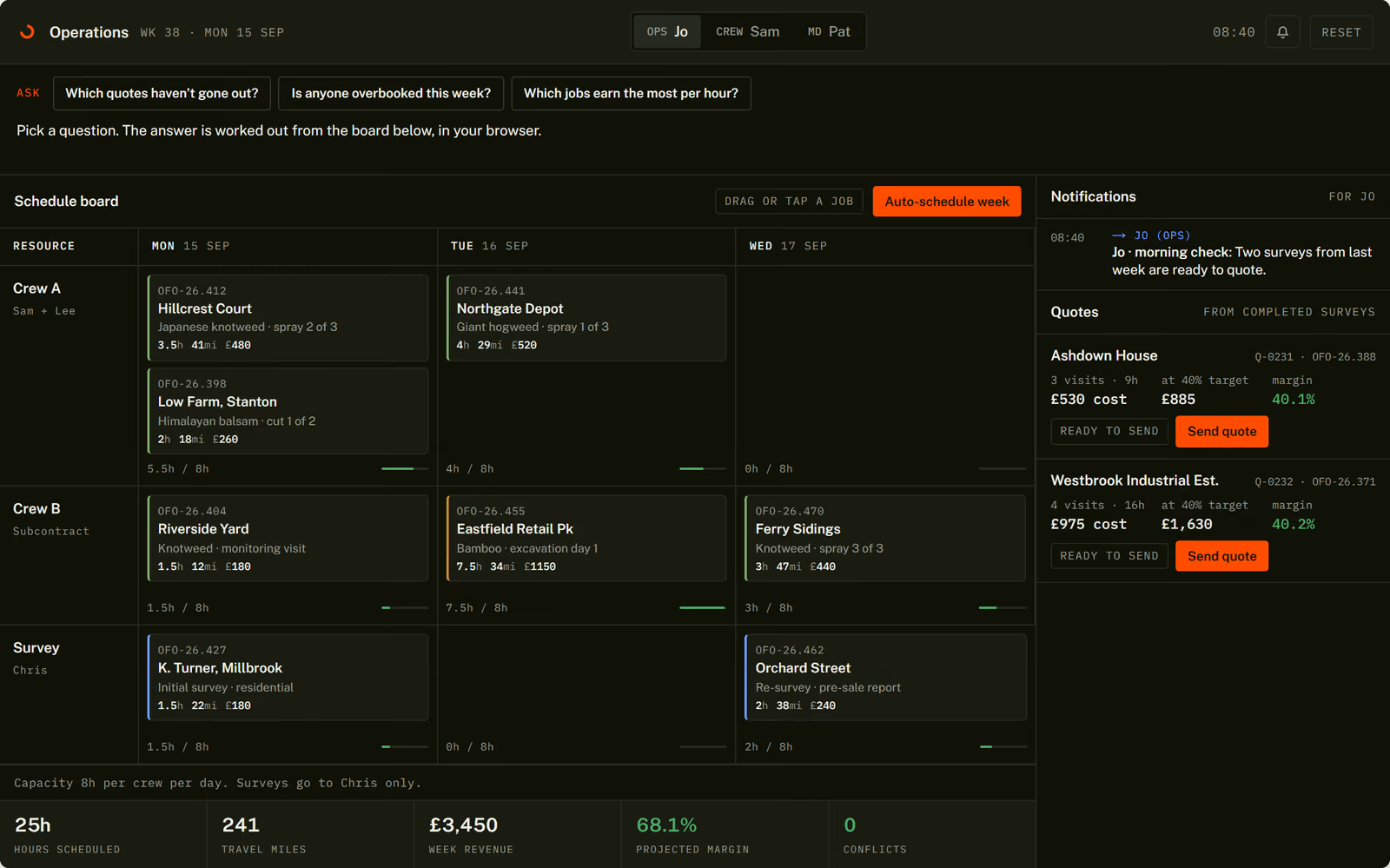
Not a screenshot. Not a video, not a Figma file. Role-curated screens, a rules-based scheduler, a quote engine with an approval threshold, offline field capture and in-app notifications, all running in your browser.Demo data, real logic.
One schema, one history, clean data.
Every system we build is one schema, one history, clean data. One schema means a job is one record, not four copies that drift apart. One history means everything that ever happened to a customer, a site or an invoice is on the record, in order, in one place. Clean data means the re-typing is gone, and with it the errors that make reports lie.
None of that is an AI feature. It's just how software should be built. But it's also the only foundation AI and automation can actually stand on, which is why we build it in from day one, whether you ever switch anything clever on or not.
What that unlocks.
Automation
Rules acting on clean data. The scheduler that places a week of visits in seconds, the quote that goes out the moment a survey is complete, the reminder that sends itself. Not magic, just your rules, running on records the system can trust.
Reporting
When there's one source of truth, the numbers agree with each other. Margin, utilisation and pipeline come off the same records the work runs on, so nobody spends Friday reconciling three versions of the same figure.
AI on your data
Ask questions of your own records, like what did we do at this site last year, or which quotes are going stale, and get answers grounded in your history, not a chatbot bolted onto the side. Added when it earns its place, priced at usage, not hype.
Everything your business knows, written down once.
Every process, price rule, template and piece of know-how, documented in one place that your team and your AI both read from.
- Someone moves on,and the next person learns from it.
- Someone's off ill,and the work still runs.
- Your team spends less time on admin,and more with clients.
- AI answers the way your business works,not the way a generic chatbot would.
AI-ready, not AI vapour.
We won't sell you an AI feature for the sake of the word. Plenty of what gets sold as AI right now is a text box in front of somebody else's model, and plenty of businesses need a working scheduler far more than they need either.
AI-ready means the foundations are right, so that when there is a job AI genuinely does better, your system can take it on without being rebuilt. Your data stays yours, in your database, and the only AI costs are usage-based calls you can see, the same way SMS and mapping are priced.
If you never switch any of it on, you still end up with the thing that matters: one system that knows your whole business.
How a build works.
Scoping and a working demo come with the Advisory retainer, before you commit to a build. If it's not worth building, we'll say so.
Scope
We sit with the people who do the work and learn how it actually runs, not from a spec handed over at the start. You get a written scope, a fixed price and a working demo of your system before you commit to anything.
Build
Fixed scope, fixed price, half paid on start. We keep learning how you operate over the course of the build, so the system fits the way the work actually runs. You see it grow, with no big reveal at the end.
Go live, and after
An acceptance certificate signed at go-live: you agree the system does what the scope says, and the second half is due. Then daily backups, continued monitoring, and the person who built it a phone call away.
No surprises in the invoice.
Fixed price, half on start and half at go-live, with an acceptance certificate signed at go-live. No per-seat fee, and you own everything: the system and its data are yours.
Hosting and support is its own monthly line, never inside the build price.
Safe by default.
A three-stage safety audit: two checks before go-live, and a third that never stops.
Stage one: the code itself
We review it and run automated checks across it and every third-party package it depends on, looking for known weaknesses and for the ordinary mistakes that matter: data or keys ending up somewhere they should not be, a page that forgets who is allowed to see it.
Stage two: the running system
Before you go live we scan it the way an outsider would probe it, across the log-in, the forms and anything else reachable from the internet, and fix what that turns up while nobody else has found it.
Stage three: monitoring, from go-live onwards
Errors report themselves to us, we watch for newly published weaknesses in the packages your system uses, and we are alerted if it goes down, which is why you will usually hear about a problem from us first.
The hard questions.
The ones people actually want to ask a three-person studio, answered straight.
What happens if you get hit by a bus?
A fair question, and one we would ask too. There are three of us, so no single bus takes the knowledge with it. Beyond that: every system we build lives in its own repository, escrow-ready, with a documented handover, and you own the code and the data outright. The worst case is finding someone new to look after a system you already own, not losing the system.
What if it goes wrong?
The scope we both sign says what the system must do, and the second half of the price is not due until it does it. The acceptance certificate at go-live is you agreeing that it does. After go-live, if something breaks, you ring the person who built it and we start fixing it within the hour. And if the honest answer at scoping is that the build is not worth doing, we say so before you commit to it.
Who owns the system?
You do. The system and its data are yours: the code, the database and everything in it. We do not licence it back to you, and there is no per-seat fee: hosting and support is set for your team size at go-live and only steps up if headcount grows by around 10% or more.
What happens after go-live?
The system is backed up daily, it has been through the safety audit above, and the third stage of that audit keeps running. Support means ringing the person who built it, not a ticket queue and not an account manager, and we start fixing any issue within the hour. Because we learned how you operate during the build, a fix takes minutes rather than a week of somebody getting up to speed.
Start with a free call and AI report.
Book a free call. We learn how the business runs, then send you a written report on how AI could help your business. No payment details, nothing to cancel.
Start with the scope questionnaire